Eighteen months ago, the narrative in PMU circles was that powder brows were plateauing. The look had been dominant since roughly 2021, Instagram was saturated with before-and-afters, and clients who had been through the procedure once were coming back asking for something different — something more textured, more natural-looking.
What happened next has been instructive for anyone trying to read where demand actually goes, rather than where conference panels predict it will.
The Data Picture in 2026
Based on booking platform data across independent studios in North America, Australia, and the UK, nano brows now account for approximately 38% of initial brow PMU appointments — up from roughly 22% in early 2024. Powder brows have declined from a peak of around 54% to approximately 41%. The remaining share is split between combo brows and hybrid techniques.
These numbers carry important caveats. Nano brows are disproportionately popular in urban markets with younger clients (25–35). Powder brows remain the dominant choice in suburban and regional markets, and among clients 40 and older who tend to prefer the defined, filled look that powder brows deliver. The “winner” depends heavily on which segment of the market you’re asking about.
Why Nano Brows Are Gaining
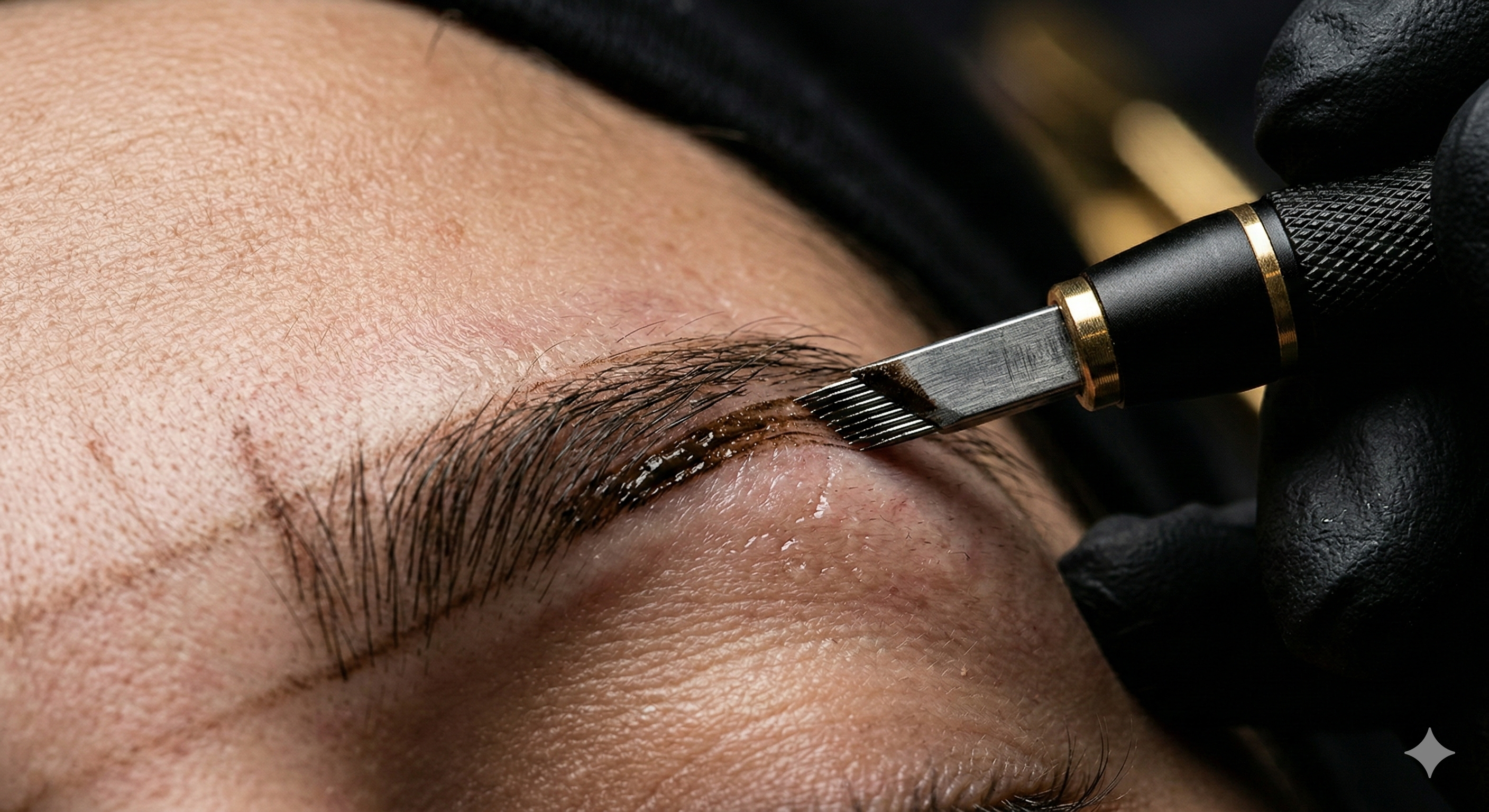
The nano brow surge is driven by a convergence of technology and aesthetics. Machine needle technology has improved significantly — finer needle diameters at higher precision tolerances now allow single-needle machine work that genuinely mimics individual hair strands in a way that earlier rotary equipment couldn’t consistently achieve.
At the same time, client aesthetic preferences have shifted toward naturalism. The bold, filled brow that defined the early 2020s has given way to a preference for brows that look grown-in, undone, and individual. Nano strokes serve this preference better than powder brows, which carry an inherent “made up” quality regardless of how soft the execution is.
The social media effect is also real. Nano brow content performs well on Instagram and Pinterest because the results photograph beautifully — the fine hairstrokes catch light differently than shaded brows, creating images that look immediately distinctive in a saturated feed.
Where Powder Brows Still Win
Powder brows retain clear advantages in specific client profiles. For clients with oily skin or large pores, powder techniques heal more predictably than hairstrokes, which can blur or migrate in high-sebum environments. For clients who prefer a polished, defined look at all times — and who don’t want to wear additional brow makeup — powder delivers better fill and definition than hairstrokes alone.
Powder brows also remain the technique of choice for correction work on heavily pigmented or previously tattooed brows. The technique’s ability to deposit even, diffused pigment makes it significantly more effective for color-correcting or neutralizing unwanted tones from older PMU.
For artists who built their practice on powder brows, the trend shift isn’t a signal to abandon the technique — it’s a signal to develop nano skills as an additional offering rather than a replacement. Artists who offer both techniques, and can advise clients on which is appropriate for their skin type and lifestyle, will consistently outperform specialists who are limited to one approach.
The Combo Brow Middle Ground
Worth noting is the sustained relevance of combo brows — hairstrokes through the front and middle of the brow, shading through the body and tail. Combo brows have held roughly 15–18% market share consistently, suggesting they serve a specific client preference that neither pure technique satisfies alone: the client who wants naturalism in the inner brow and fill/definition through the arch and tail.
For artists developing their technique library, combo brows are arguably the highest-utility single skill to develop after mastering either hairstrokes or powder separately — because they require both, and because the client profile they serve is extremely stable.
What This Means for Your Practice
If you’re building a PMU practice from scratch in 2026, the market data supports leading with nano or combo brows as your primary offering in urban markets, while maintaining powder brow capability for correction work and clients who specifically request it.
If you’re an established powder brow artist, the trend shift is reason to invest in machine nano training — not urgently, but intentionally. The clients requesting natural-looking results are a growing segment that will increasingly pass over artists whose portfolio doesn’t include hairstroke work.
The technique landscape in PMU has never been more diverse or more capable. The artists who thrive in the next three years won’t be those who bet on a single technique — they’ll be those who read their market accurately and build a service menu that matches what’s actually being asked for.